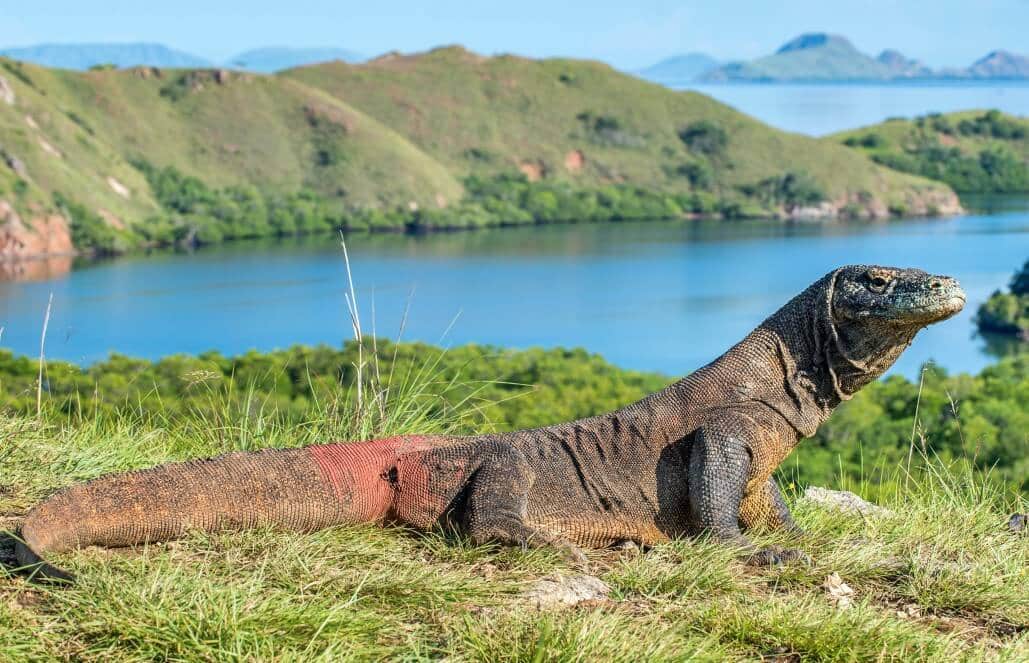
It wasn’t until 1910 that the outside world first discovered Komodo dragons. For millions of years these ancient reptiles had ruled supreme on their Indonesian islands. Without any natural predators, they dominated the ecosystem, and their survival was virtually guaranteed.
The Komodo dragons are a relic of a time when enormous reptiles lived all across this region of the world, from Indonesia down to Australia. Most were wiped out over the years, but this species somehow survived. For scientists, they are now a critical piece of evidence of evolution.
Where to Find Komodo Dragons
The majority of the world’s remaining Komodo dragons are found on two small islands– Komodo Island and Rinca Island– which are all accessible within two hours by boat from the nearest major town of Labuan Bajo, on Flores.
There are less than 5,000 of the species left in total, but they’re easily spotted up close by visitors on both these islands. Their only protection is a local ranger with a stick, who will keep an eye out for any animals getting too close. These ancient animals have free reign over the land: They generally won’t attack humans, but it has happened in the past.
Komodo dragons are vicious and lazy predators. Unlike most reptiles, they often hunt in packs and will surround an animal before attacking it. Sometimes they will bring down their prey with one bite but, if larger animals get away, it doesn’t mean the hunt is over. The saliva of the Komodo dragon contains bacteria that will eventually kill the animal it has bitten. The ancient predators can smell blood from up to 10 kilometers away, and will just track their target for days until it dies.
Life on Komodo and Rinca Island
For being home to such a dangerous species, Komodo and Rinca Islands give off a sense of calm. The blue waters around them are still and the sun shines brightly for most of the year. Birds in the trees tweet happily, perhaps unaware of the monsters below. The Komodo dragons spend most of the day lazing in the sun, conserving their energy. Wild water buffalo, deer, horses and pigs graze on the land while macaques play near the shoreline.
On Rinca Island, the star attractions generally gather on one side, where the rangers can easily keep an eye on them. On the other side, visitors arrive by boat to enjoy the beautiful pristine waters and beaches. One, known as Pink Beach, has become famous in its own right for the color of its sand. Red coral in the water has become mixed with the grains of sand to give off a hue that glimmers in the sunlight.
The Wildlife of Indonesia
Indonesia is the world’s largest archipelago, with more than 17,000 islands stretching across an area about 5,000 kilometers wide. This isolated chain has cultivated one of the richest levels of diversity on the planet, both for fauna and indigenous cultures. The general sense of harmony between the two is one of the reasons so many types of animals have been able to flourish for so long in their own small ecosystems.
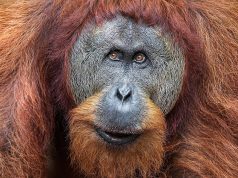
Like Komodo dragons, many of the animals found in Indonesia are endemic to very small regions within the country, cut off by water from the rest of the archipelago. These species include the Orangutans in Kalimantan, the Javan Rhinoceros on the western tip of Java, the Drongos of Sumatra, and the Tamarau on Celebes.
Some of these species are endangered (the Javan Rhino in particular), and measures have been put in place to protect them. However, human intervention in the natural world poses a threat to many of the country’s animals.
Bali Barat National Park
Indonesia has 50 national parks across the archipelago, covering land and sea areas. Even on the popular tourist island of Bali, you can still find untouched and protected wilderness. While large hotel developments and nightlife strips have expanded on the island’s southern tip, 158 square kilometers of land in the northwest has been protected as Bali Barat National Park.
The park’s landscapes are a mixture of monsoon forest, mangrove forest, rainforest, savannah and even marine areas. The main aim of Bali Barat is to protect the Bali Starling, one of the most endangered birds in the world. But it’s not the only attraction here: There are more than 150 species of birds found within the park’s perimeter.
Fortunately, Indonesia has not seen the same level of tourism that nearby neighbors such as Thailand have. In general, tourism development has been focused on a small number of areas that have grown rapidly in the past few decades. This means there are still large parts of the country that remain relatively untouched, with natural habitats and native flora and fauna still accessible for travelers.
Some were protected by circumstance, such as the Komodo dragons. Some have been protected more recently by regulation, like the Javan rhinoceros and the Bali Starling. Unfortunately, animals like the Orangutan are still under threat as their land is encroached upon by farmers looking for an income from palm oil.
Explore Indonesia’s Wildlife Hotspots
For eco-minded travelers, there is a whole world of fauna to discover across the Indonesian archipelago that takes visitors on a journey through diverse landscapes and millions of years of evolution. Internaitonal Expeditions’ Bali to Komodo tour features ranger-led nature walks, snorkeling and more.