Home Blog

Gorillas and Wildlife Safaris in East Africa

0

Combining wildlife safaris and gorilla trekking on a self-drive tour in East Africa is one of the best adventure experiences in Africa. It gives you two very different but equally amazing experiences in one trip. You enjoy open savannah game drives where you see lions, elephants, giraffes, and buffalo, and you also walk into thick mountain forests to meet endangered mountain gorillas face to face.

A self-drive journey gives you the freedom to move at your own pace, stop for photography, and enjoy remote areas without strict schedules. Countries like Uganda, Rwanda, and parts of Kenya and Tanzania make it possible to connect iconic national parks in a single trip. From game drives in open plains to guided forest treks, this combination creates a perfect balance of adventure and nature.

It is ideal for travelers who want independence, flexibility, and a deeper connection with Africa’s incredible wildlife and landscapes, making it a once-in-a-lifetime journey for nature lovers and explorers alike across regions.

What is a Self-Drive Safari with Gorilla Trekking?

A self-drive safari means you do not travel with a driver-guide. Instead, you rent a strong safari vehicle, usually a 4×4, and drive yourself through national parks and highways. Gorilla trekking is a guided forest walk where you hike into the mountains to find a family of wild gorillas. Rangers lead you, and once you find the gorillas, you spend a limited time with them.

When you combine both, you get:

  • Game drives in savannah parks
  • Long road trips through countryside
  • Forest hiking to see gorillas
  • Full freedom of travel

It is a mix of driving adventure and wildlife experience. 

Why Combine Safaris and Gorilla Trekking in Uganda & Rwanda?

  1. Two completely different wildlife experiences in one trip

Combining safaris and gorilla trekking in Uganda and Rwanda gives you two very different but amazing wildlife experiences in a single journey. On safari, you travel in a vehicle through open savannah parks where you see large animals like lions, elephants, giraffes, buffalo, zebras, and antelopes. These animals move freely in wide grasslands, and you watch them from a safe distance during game drives. The experience is exciting, fast-moving, and full of action, especially when predators are active.

In contrast, gorilla trekking takes you into thick mountain forests where you walk slowly with guides to find a family of mountain gorillas. Instead of watching from a car, you are on foot, moving quietly through nature. When you finally meet the gorillas, everything becomes calm and peaceful as you observe them eating, playing, and resting. Having both experiences in one trip gives you a perfect balance of excitement and quiet nature moments.

  1. You see both savannah wildlife and rare mountain gorillas

Another big reason to combine these activities is that you get to see two very different types of wildlife in one journey. In savannah parks such as Queen Elizabeth National Park, Murchison Falls National Park, or Akagera National Park, you can see the famous African wildlife including the Big Five animals. These include lions, elephants, buffalo, leopards, and sometimes rhinos, along with many other species.

These animals live in open landscapes where they are easy to spot during game drives. After enjoying this, you move to mountain forests like Bwindi Impenetrable National Park or Volcanoes National Park, where you meet mountain gorillas. Gorillas are very rare and live only in a few places in the world. Seeing them up close in their natural forest home is very special. This combination allows you to experience both classic African safari animals and rare forest primates in one trip.

  1. Beautiful and changing landscapes throughout the journey

Combining safaris and gorilla trekking also means you enjoy a wide variety of landscapes during your trip. In safari parks, you see endless open plains, rolling hills, rivers, and lakes where animals roam freely under wide skies. These areas are often warm and dry, making it easy to spot wildlife from far away.

As you travel toward gorilla trekking areas, the scenery slowly changes into green hills, misty mountains, and thick rain forests. The air becomes cooler, and everything feels more quiet and peaceful. The roads also take you through rural villages, farms, and tea plantations, giving you a real view of local life in Uganda and Rwanda. This constant change in scenery makes the journey more interesting and enjoyable because every day feels different and new.

  1. Uganda and Rwanda are close and easy to travel between them

One of the main advantages of combining safaris and gorilla trekking in Uganda and Rwanda is that the two countries are neighbors, making travel between them simple. You can drive from safari parks in Uganda to gorilla trekking areas in either Uganda or Rwanda without needing long flights. Border crossings are straightforward when you have the correct documents like passports and visas.

Many travelers use the East Africa Tourist Visa, which allows movement between both countries easily. Because the distances are not too large, you can design a smooth road trip where you move step by step from one destination to another. This closeness makes it very practical to enjoy both safari and gorilla trekking in a single itinerary without complicated travel arrangements.

  1. Better value and use of travel time

Combining these two experiences also gives you better value for your time and money. Many travelers spend a lot of effort traveling to East Africa, so it makes sense to experience as much as possible in one trip.

Instead of planning two separate holidays, one for safari and another for gorilla trekking, you can do both in a single journey. This reduces the need for extra flights, hotel bookings, and separate planning. It also helps you make the most of your vacation time because you visit more places and see more wildlife in one trip. For people who enjoy long travel adventures, this combination gives maximum experience in a single holiday without repeating similar travel costs later.

  1. Uganda and Rwanda offer different but complementary safari styles

Uganda and Rwanda offer different travel styles that work very well together. Uganda is known for larger national parks and longer safari experiences. You can enjoy boat cruises, long game drives, and more remote wildlife areas where you may not see many other tourists. This gives a more wild and adventurous feeling. Rwanda, on the other hand, is smaller and more organized, with shorter driving distances and well-maintained roads.

It is especially popular for easy access to gorilla trekking in Volcanoes National Park and for a clean, modern travel experience in Kigali. When you combine both countries, you get Uganda’s raw and adventurous safari experience together with Rwanda’s comfort and convenience. This mix creates a balanced and enjoyable journey.

  1. More flexibility for gorilla trekking permits and planning

Gorilla trekking permits are limited and can sell out quickly, especially during busy seasons. By combining Uganda and Rwanda in one trip, you have more flexibility in planning your trek. If permits are not available in one country, you may still find availability in the other. Uganda and Rwanda both offer gorilla trekking, so you have two options instead of one. This makes it easier to adjust your travel dates and routes without missing out on the experience. It also helps self-drive travellers who may want to keep their itinerary flexible. Having more than one trekking location increases your chances of successfully including gorilla trekking in your safari journey.

  1. A once-in-a-lifetime complete African experience

Finally, combining safaris and gorilla trekking gives you a full and unforgettable African experience. Very few places in the world allow you to see large wild animals in open savannahs and then also meet rare mountain gorillas in misty forests within the same trip. This combination connects you deeply with nature in two very different environments. You experience the thrill of chasing wildlife sightings during game drives and the calm emotional moment of sitting quietly near gorillas. Many travellers describe this as one of the most powerful wildlife experiences they have ever had. It is not just a holiday, but a meaningful journey that stays in your memory for a lifetime.

Where to do combined wildlife safaris and gorilla trekking in Uganda & Rwanda

  1. Start from Entebbe (Uganda) – Best entry point for full Uganda safari + Bwindi gorillas

The most common starting point for combining wildlife safaris and gorilla trekking in Uganda is Entebbe. This is where Uganda’s international airport is located, so most travellers arrive here. From Entebbe, you can easily start a road trip into Uganda’s main safari parks like Murchison Falls, Kibale, and Queen Elizabeth before finishing with gorilla trekking in Bwindi Impenetrable Forest. A popular route is to drive from Entebbe to Murchison Falls National Park for big game viewing, then continue south through Kibale for chimpanzees, Queen Elizabeth for lions and elephants, and finally reach Bwindi Impenetrable National Park for gorillas. This route gives you a full wildlife experience because you move from open savannah to forest, ending with gorilla trekking. It is the best choice for travellers who want a long, complete Uganda safari combined with gorilla trekking in the same country.

  1. Start from Kampala – Good city base for self-drive safaris in Uganda

Another common starting point is Kampala, the capital city of Uganda. Many travellers pick up their self-drive safari vehicles here and begin their journey into the national parks. Kampala is well connected by road to most safari destinations, making it a practical base for road trips. From Kampala, you can first drive to Lake Mburo National Park for a short safari, then continue to Queen Elizabeth National Park for game drives and boat cruises, followed by Kibale National Park for chimpanzees, and finally Bwindi for gorilla trekking. This route is especially popular for self-drive travellers because it allows a gradual move from easy driving roads to more remote forest areas. Kampala also has many rental companies, hotels, and services that help you prepare before heading into the parks. It is a good starting point for flexible safari planning.

  1. Start from Bwindi or Southwestern Uganda – Best for short safari + gorilla focus

Some travellers choose to start or end their trip directly in southwestern Uganda, especially near Bwindi Impenetrable National Park. This area is the main gorilla trekking region and is also close to other safari parks like Queen Elizabeth National Park. Many routes in this region are connected, so you can combine a short wildlife safari with gorilla trekking without long driving distances. A simple option is to do game drives in Queen Elizabeth National Park first, then continue directly to Bwindi for gorillas. This area is ideal for travellers with limited time who still want both safari and gorilla trekking in one trip. It is also useful for people who enter Uganda from Rwanda because Bwindi is closer to the Rwanda border than to Kampala. This makes the southwest a very practical hub for combined itineraries.

  1. Start from Kigali (Rwanda) – Fastest route to gorilla trekking + Akagera safari

A very popular starting point for combined trips is Kigali. Kigali is Rwanda’s capital and main international entry city. From here, you can easily reach Rwanda’s main safari park, Akagera National Park, which offers classic game drives with lions, elephants, buffalo, giraffes, and rhinos. After a few days of safari in Akagera, you can drive north to Volcanoes National Park for gorilla trekking. The drive from Kigali to Volcanoes National Park is short and smooth, making it one of the easiest gorilla trekking experiences in Africa. Kigali is also commonly used as a starting point for cross-border trips into Uganda, especially for visitors going to Bwindi. Many travellers prefer Kigali because it reduces long driving hours and allows a more comfortable safari and gorilla trekking combination in a shorter time.

  1. Volcanoes National Park (Rwanda) – Easy gorilla trekking with safari add-ons

The area around Volcanoes National Park is one of the best hubs for gorilla trekking in Rwanda. This region is located in the north of the country and is very close to Kigali. While the main activity here is gorilla trekking, travellers can combine it with wildlife safaris in Akagera National Park before or after their trek. A typical route is to start in Kigali, go to Akagera for savannah wildlife viewing, and then continue to Volcanoes National Park for gorillas. This combination gives a complete Rwanda experience in a short time. The roads are good, travel distances are short, and planning is simple. This makes the Volcanoes region ideal for travellers who want a more comfortable and less tiring safari combined with gorilla trekking.

  1. Cross-border Uganda & Rwanda routes – Best full combined adventure

One of the best ways to experience both safaris and gorilla trekking is by combining Uganda and Rwanda in one trip. This usually involves starting in either Kigali or Entebbe and crossing between the two countries by road. A common route is to start in Uganda with wildlife safaris in Queen Elizabeth or Murchison Falls National Park, then travel to Bwindi for gorilla trekking, and finally cross into Rwanda for Volcanoes National Park or Akagera. Another option is to start in Kigali, do Akagera safari, cross into Uganda for Bwindi gorillas, and continue with game drives in Queen Elizabeth National Park. The border areas between southwestern Uganda and Rwanda are well connected, making this combination very practical. This cross-border route is the best choice for travellers who want a full East African experience with both savannah wildlife and mountain gorillas in one journey.

Best Time to Do Wildlife Safaris and Gorilla Trekking in Uganda & Rwanda

Dry Season (June to September and December to February)

The dry season is the best time for both wildlife safaris and gorilla trekking in Uganda and Rwanda. During these months, there is very little rain, so roads in and around national parks are easier to drive on, especially for self-drive travellers. In savannah parks like Queen Elizabeth National Park, Murchison Falls National Park, and Akagera National Park, animals gather around rivers and waterholes, making them easier to spot during game drives. You can see lions, elephants, giraffes, buffalo, and many other animals clearly because the grass is shorter and the weather is clear. For gorilla trekking in Bwindi Impenetrable National Park and Volcanoes National Park, forest trails are less muddy, so hiking is easier and more comfortable. Visibility is also better for photography. This season is the most popular, so gorilla permits and lodges should be booked early. 

Wet Season (March to May and October to November)

The wet season is not the most popular time, but it still offers a different kind of experience for wildlife safaris and gorilla trekking. During these months, Uganda and Rwanda receive regular rainfall, which makes some roads muddy and more difficult to drive, especially in remote areas. Gorilla trekking can also be more challenging because forest trails become slippery and hiking takes more effort. In savannah parks, animals are sometimes harder to spot because there is more water and thick vegetation, so they spread out across larger areas. However, this season also has some advantages. The landscapes are very green and beautiful, making photography more scenic. There are fewer tourists in the parks, so the experience feels more peaceful and private. Accommodation prices are often lower, and it is easier to find availability for gorilla permits compared to peak season.

Conclusion

Combining wildlife safaris and gorilla trekking on self-drive tour in East Africa is a unique and unforgettable adventure. It allows you to experience both open savannah wildlife and rare mountain gorillas in one journey. You enjoy the freedom of driving yourself, exploring at your own pace, and connecting deeply with nature. Uganda and Rwanda make this combination easy because they are close, well connected, and rich in wildlife. With good planning, this trip becomes smooth, exciting, and very rewarding. It is truly a once-in-a-lifetime experience for nature and adventure lovers.
Best Places to see Orangutans in Borneo

0
Orangutans

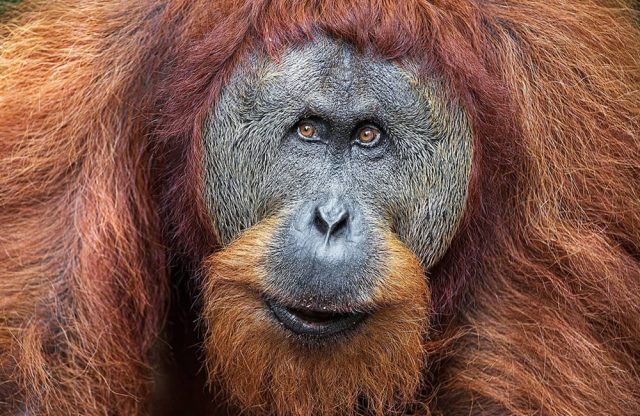
Borneo has a number of iconic species, including the pygmy elephant, proboscis monkey and of course the incredible old man of the forest, or orangutan as you and I know them as.  During my trip to Borneo I was lucky enough to see all 3 of these in the wild, however the focus of this post is on the orangutan (although the other 2 are also covered in the final location).

Seeing orangutans in Borneo isn’t all that hard due to the large number of rescue centers which have been established for them.  This sheer number is a real shame as it is testament to the problems which we as a species cause, driving them out of their habitat through building works, replacing their habitat with palm plantations or capturing them as pets.  However it is still possible to see them in the wild as well.  You wont get as close to a wild one and the chances of an unobstructed photo will be lower, however the whole experience is far more magical and will stay with you for a long time!

The following locations are all based in Malaysian Borneo, and I will state after each one whether they are in Sabah or Sarawak as we visited both.

Semenggoh Nature Reserve
Sarawak

During our trip to Borneo we went to Semenggoh and Sepilok, and I must say that even though Sepilok is by far the more well known and seems to have a lot more funding pumped in to it, Semenggoh is certainly on par with them. There are a number of other attractions such as an orchid garden and nature walk here but because we went to the second feed and had only arrived in Kuching a couple of hours before hand we did not have time for these.

The viewing areas for the Orangutans are beautiful, especially if you get to go to the one slightly off the main track and more in the jungle. We saw one big male called Ritchie (see photo below) who was a great animal to see on our first day! We had a lot of time to photograph him (certainly at least 20 minutes or so).

The staff here are very friendly and did a great job of explaining the rules and preferred conduct at the center. There is also a gift shop where you can buy better quality photos, post cards and books.

Sepilok Orangutan Sanctuary
Sabah

Sepilok is a very clean place and they make every effort to keep it in this way, as well as keeping all the visitors and animals safe. You are not allowed to bring food and drink in to the center and there are lockers available for keeping such items and bags (if you go on a tour it is easier to leave your belongings on the coach).

When you first arrive there is an introductory video about Orangutans and the work of the center which is very interesting. However it is after this that you get to see what you came there for.

You walk along a board walk in to the rain forest to a feeding area where there is a lot of place for numerous visitors to all be able to take amazing photos. You get to be very close to them, and we had 3 females make their way along a rope just above the board walk.

I felt that you are able to get more than close enough to these amazing animals, and it is great to see them returned to a wild state. 2 of the females we saw had babies which shows the great work which goes on there. It would be great to be able to see the section where they work with the babies but it is understandable that this is not possible… So don’t go there expecting to see babies in wheel-barrows or forest schools like you see on tv…  Seeing that is reserved for tv presenters!

There are numerous other animals to see along the board walk as well such as Long Tailed Macaques and Giant Squirrels.  However with all this wildlife to be seen, make sure you bring plenty of batteries and sd cards for your camera.  I sadly ran out about half way through my tour, having left my spare batteries on the coach.  It is still an amazing experience, but I do love to have a camera handy!

Kinabatangan River
Sabah

We spent 3 days on the Kinabatangan river with overnight stays at one of the lodges, and the river cruises are one of the best ways to see the natural wonders of Sabah.

We traveled up river on the first day using a twin engine speed boat with a canopy (which was handy because of the sudden heavy downpour we had about half way up the river), which is the same boat which took us back to Sandakan at the end of our trip… If your tour operator gives you the option of going back by boat or road, please don’t miss this opportunity… On our trip home a few people chose to go by road, and we ended up seeing 3 wild Orangutans on the journey with one being very close to the river posing for some of the best photos I took the whole trip!

We took every opportunity available for a river safari including some in the morning (as the fog lifts on the river its a gorgeous experience), and some in the evening. Both times give you opportunities to see different types of animals so doing at least 1 of each is worth your time.

The river safaris are done on much smaller single engine boats with no canopy, which makes for much better viewing of the animals… and as luck would have it, we didn’t need to worry about how this would affect our trip in the rain as it stayed nice and dry the whole time… Saying this just in case we did always ensure we had a poncho or rain coat with us. Also remember that there is no canopy and especially on your way back from the morning trips you will be open to the sun so make sure you bring a hat, sunglasses (to combat the glare of the sun from the river when not looking for wildlife) and put on plenty of sun block!

Whilst this post is about seeing orangutans, we actually saw a massive amount of wildlife including:

  • Rhinoceros Hornbills
  • Pied Hornbills
  • Bat Eating Eagle (which put on an amazing show for us)
  • Crested Goshawk
  • Kingfishers
  • Storm Storks (such a treat for this rare animal)
  • Bitterns
  • Herons
  • Bats
  • Provost Squirrel
  • Proboscis Monkeys
  • Long Tailed Macaques
  • Orangutans
  • Asiatic Elephants
  • Asian Water Monitors
  • Crocodiles
  • Mangrove Snakes

30 Fascinating Facts About the Brazilian Amazon

0
The Amazon

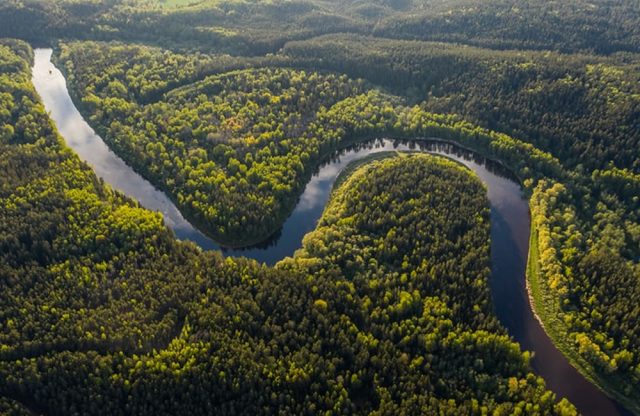
When we think of wild places, the Brazilian Amazon is often one of the first locations that come to mind. This verdant swath of rainforest is a unique world unto its own – a place where rare animals roam and indigenous tribes still live according to the ways of their ancestors. At its vibrant heart is a river that dwarfs all others, surrounded by a forest with remote corners that still remain largely unknown.

The Amazon (both the rainforest and the river) is both mythical and magical, aptly named after the legendary female warriors from Greek mythology. The rainforest nearly stretches from ocean to ocean across the northern half of South America. It has 17 tributary rivers that each individually run 1,000 miles or more before finally feeding into the almighty Amazon River.

The overwhelming majority of the Amazon resides in Brazil, including the mouth of the river and the largest part of the Amazon’s fertile basin. So when the facts start to fly regarding this amazing ecosystem, the Brazilian Amazon is nearly always a large part of the conversation. These statistics are full of superlatives, oddities, and other wondrous elements.

Brazilian Amazon Rainforest Facts

1.  Around 6% of the Earth’s surface is covered in tropical rainforest, and the Amazon rainforest is the world’s largest. It covers about 3 million square miles, which is larger than the next two largest forests (the Congo and Indonesia) combined. It accounts for around half of the tropical forest remaining on the planet, which is an area larger than the contiguous United States.

2. Nearly two-thirds of the Amazon’s expanse is in Brazil. But the Amazon rainforest also spans eight other countries: Colombia, Peru, Bolivia, and Ecuador are included in the Amazon basin, and Venezuela, Suriname, French Guiana and Guyana are part of the rainforest’s biogeographical boundaries.

3. Known for being impossibly dense, the Amazon’s forest canopy is so thick that it takes around ten minutes for falling rain to hit the ground. The sun actually never does reach it: The floor of the Amazon rainforest lies in permanent darkness.

4. Despite being so far away and infamously arid, northern Africa’s Sahara Desert is at least partially credited for keeping the Amazon fertile. Winds carry mineral-rich dust from the Sahara all the way to the Amazon, depositing over 27 million tons a year in the Amazon Rainforest. This is a critical part of the ecosystem because the heavy amount of rain in the Amazon washes away vital phosphorus from the soil. The Sahara, in part, replenishes it.

Brazilian Amazon

Amazon River Facts

5. In addition to claiming the title of world’s largest rainforest, the Amazon is also home to the world’s largest river by volume. The Amazon River discharges five times the quantity of water of any other river on the planet. Its catchment area encompasses a whopping 2.72 million square miles, which is roughly 40% of the entire continent of South America.

6. While the Nile is typically considered the longest river in the world, the Amazon has staked a claim to this title as well. Certain scholars have argued that the Amazon is actually longer because they claim the origin of the Amazon is not the Apurímac River but traces to the Cordillera Rumi Cruz in Peru. This, they think, adds the necessary distance to qualify the Amazon as the world’s longest, as well as largest, river.

7. Today, the Amazon River empties into the Atlantic Ocean. But, until about 10 million years ago, it actually flowed in the opposite direction. Back then the river moved westwards toward a mammoth lake at the foot of the Andes. From there, the water moved north and into the Caribbean Sea. Scientists can’t perfectly explain the change, but they do know that it was geological, tied up with shifting plates and sediment build-up.

8. The Rio Hamza is a subterranean river underneath the Amazon that is just as long, but many times as wide as the Amazon River. It runs about 2.5 miles underground, stretching from beneath the Andes mountains through the Amazon and Marajó basins before joining the Atlantic Ocean. That being said, the river’s flow makes a snail look speedy: It moves at just one millimeter an hour.

9. There are no bridges whatsoever over the Amazon River. This isn’t because the river is too wide, but rather because there are few roads and the river’s width changes dramatically during the rainy season.

Brazilian Amazon

Amazon Conservation

10. The Amazon has been in existence for no less than 55 million years, making it part of the Eocene Epoch. During that time, the oxygen in Earth’s atmosphere doubled and the last great “global warming” incident took place, producing escalated sea levels, acidic waterways, and many species extinctions. This event, the Paleocene-Eocene Thermal Maximum, is possibly our best historical model for what today’s climate change may bring.

11. Around 20% of the world’s total oxygen is produced in the Amazon rainforest. The forest has 16,000 different species of trees and is estimated to have nearly 400 billion individual trees. All of this arboreal magnificence sequesters between 90 and 140 billion metric tons of carbon. When we lose forest habitat, that carbon makes its way back into the atmosphere. This, obviously, is not a good thing.

12. Deforestation of the Amazonian rainforest has been on the decline since 2004, particularly in Brazil. Unfortunately, over the past 40 years, about 20% of the Amazon rainforest has already been cut down. Cattle ranching is responsible for around 70% of that deforestation. The Amazon Basin is roughly the size of the 48 contiguous U.S. states, covering 40% of South America, and 80% of it is still forested.

13. One out of every 10 plant and animal species in the world lives in the Amazon rainforest. That accounts for over 2,000 species of fish, over 400 species of mammals, nearly 400 species of reptiles, and about 2.5 million kinds of insects. The Amazon also has 1300 species of birds or one out of every five species in the world. There are also about 40,000 specific plant species. In 2017, a new species of plant or animal was discovered in the Amazon every other day.

14. The Amazon Region Protected Area (also known as ARPA) launched in 2002 and hopes to encompass an area larger than all the U.S. national parks combined. It includes around 150 million acres, comprising both sustainable-use sections and heavily restricted sections. By 2014, an area the size of California had already been hemmed in. It is the largest conservation project on the planet.

15. Despite the fact that Norway is over 6,000 miles from Brazil, the country donated a billion US dollars to help save the Amazon rainforest between 2008 and 2015. In fact, the Norwegians are the biggest benefactor in the world for protecting the tropical rainforests. Kudos to them for caring!


Amazon Birds

16. The Amazon’s 1300 bird species includes around 300 species of hummingbirds. It is no wonder, as the Amazon has four different ecosystems throughout the various levels of the forest. Somewhere in the ballpark of 80% of the wildlife lives up in the rainforest’s canopy. The Amazon rainforest also has eight areas of endemism with similar attributes, but different flora and fauna combinations.

17. Likely the most famous of the Amazon’s many exotic bird families, parrots are beloved across the world for their colorful plumage. The parrot family boasts a funny collection of color/body part names, such as red-necked, vinaceous-breasted, orange-winged, yellow-headed, blue-fronted and lilac-crowned. Also in the family are the beautiful hyacinth and scarlet macaws. Unfortunately, many of these birds are trapped and sold as pets, so the population numbers in their native habitat are gradually declining.

18. The Spix’s macaw is considered by some scientists to be the rarest bird in the world. It has a very tiny habitat range in Brazil, largely because it depends on the Caraibeira tree for nesting. It is critically endangered and, in fact, may already be extinct in the wild, with less than 100 left in captivity. The population has suffered due to deforestation, trapping, and the introduction of Africanized bees, which stole their favorite nesting spots.

19. The harpy eagle is the largest raptor in the Brazilian Amazon, though they are rarely seen. In terms of rainforest predators, they rank right up there with the jaguar and anaconda in terms of prowess. They like to eat monkeys, sloths, and even deer. Their legs can be as thick as an adult human’s wrist, and their wingspan can be over seven feet. Though the Philippine eagle and the Steller’s sea eagle are both nearly as big, the harpy is considered the world’s largest eagle.

20. Oropendolas, while not unattractive birds are not as well known for their looks as for their odd behaviors. They build hanging nests that can dangle over six feet from a tree branch. And, because they live in colonies, a single tree can have 100 or more of these nests in them. The male birds also have a curious mating display in which they hang upside down from a branch and even twirl on it like a gymnast!


Amazon Wildlife

21. The Brazilian Amazon is famously full of wildlife. It has giant fishes, spiders, rodents, cats, and snakes. It also has tiny versions of most of these things as well. All in all, the Amazon rainforest is home to between 10 and 20% of all the known animal species in the world.

22. The Amazon River has many special fishes in its waters. Arapaima (also known as pirarucu) were once considered the largest freshwater fish, though they have been downgraded to “one of the world’s largest freshwater fish” after catfish in Vietnam spoiled the party. There are also the world-famous piranhas, as well as a host of fish frequently found in home aquariums, such as neon tetras and angelfish.

23. Brazil’s Amazon is also home to an abundance of spectacular mammals. In the water, there are Amazon pink river dolphins and giant river otters. In the trees, there are sloths and a huge assortment of monkeys, as well as jaguars and ocelots. Giant anteaters and capybara, the world’s largest rodent, are occasionally seen scurrying on the ground.

24. You may be less impressed to hear about the 2.5 million different insects that inhabit the Amazon… mostly because that sounds like a lot of potential insect bites! But the creepy-crawlies found in the forest are special, too. Leaf-cutter ants always seem to make the all-star list. But, in terms of sheer bite force, it’s the bullet ants – which are often as big as your little finger – that deserve notice. Another cool insect to see is the peanut head bug, which looks just as you’d imagine based on the name.

25. The rainforest in Brazil is also home to a bevy of creatures you’ll want to watch out for. Electric eels can send several hundred volts through a person. The toxic secretions of poison dart frogs can be deadly from just a single touch. There are plenty of species of venomous snakes (most of which are rarely seen), as well as the world’s largest serpent, the anaconda. But the deadliest of all animals in the Amazon (and on the planet) is actually the mosquito.

Brazilian Amazon Tribes

26. As mentioned above, much of the Amazon remains largely untouched. So there are still over a million indigenous people living there. Between 400-500 different indigenous tribes inhabit the rainforest, with more than 50 who’ve had no contact whatsoever with the outside world. About half of all the Amazon’s indigenous tribes (roughly 240) live in Brazil.

27. Human settlement in the Amazon dates back to around 11,200 years ago. Though it was often thought that the Europeans discovered vast, open swaths of wilderness, recent studies suggest that indigenous peoples in the Americas were farming the forests to make them more productive. The domestication of the rainforest is still evident today.

28. The largest Amazonian tribe in Brazil today is the Tikuna, with over 40,000 people. They are mostly from the Brazilian Amazon but bleed over the borders into Colombia and Peru as well. Regrettably, like most indigenous peoples that have come into contact with settlers, they have suffered via slavery, displacement, and violence. The Tikuna people are thought to be very artistic, painting for the pure pleasure of it as well as making crafts, statues, baskets, and masks.

29. The Amazonian tribe with the largest volume of land is the Yanomami. They live rather remotely in the northern part of Brazil and the southern part of Venezuela. They have a territory of nearly 24 million acres in Brazil alone, with another 20 million in Venezuela – the equivalent of about four Switzerlands. Unfortunately, gold miners and cattle ranchers are gradually encroaching on their space and have already infected them with new diseases.

30. With less than a handful of survivors, the Akuntsu are the smallest indigenous ethnic group in Brazil. They were subjected to murders and land theft, which ultimately resulted in drastic deforestation. Nowadays, they continue to struggle for rights to their ancestral lands, and they strive to maintain some sense of their traditional culture.

As our planet’s tropical rainforests continue to dwindle at an alarming rate, the Amazon still stands as a splendid vision of what nature can do when left to its own devices.

Unfortunately, it has also come to stand as an example of what destruction humans can wreak when they’re solely focused on profits. But the forest is still home to a complex network of biodiversity, water, soil, and history.

The lessons already gained and still left to learn from this mass of fertile ecosystems is unfathomable. But, the facts around it are endlessly fascinating. We are all better off for having such places in our lives and on our planet.

Panamas National Parks: A Bird Lovers Paradise

0

Panama has 16 national parks and reserves encompassing around 5 million acres, setting aside approximately 30% of its land aside for conservation. From La Amistad National Park in the west (on the border with Costa Rica) to Darién National Park in the east (on the border with Colombia), each of these parks offers a taste of the country’s rich biodiversity.

The flora and fauna that can be found in Panama is nothing short of phenomenal. There are around 10,000 different species of plants in Panama, including 1,500 species of trees, 1,200 types of orchids, and 687 varieties of ferns.

Wildlife lovers will find lots to look at as well. Animals in Panama include 354 species of reptiles and amphibians and some 220 mammals, around 125 of which are endemic to the area.

But when it comes to birdwatching, that’s where Panama’s national parks really shine. There have been nearly 1,000 different bird species recorded in the country, of which only 122 are migratory. Here’s a look at a few of the national parks International Expeditions visits on its 3 Panama tours, as well as some of the highlighted species you may see along the way.

Panamas National Parks & Reserves

Barro Colorado Island

Located in the middle of the Panama Canal, Barro Colorado Island was formed when the Chagres River basin was flooded to create Lake Gatún during the canal’s construction. Established in 1923, it became one of the first protected biological reserves in the entire Neotropic region.

The island is best known for the Smithsonian Tropical Research Institute’s station there, which oversees the Barro Colorado Nature Monument (including the island and five adjacent peninsulas). The 21-square-mile area is home to a remarkably diverse tropical forest ecosystem that has remained relatively unaltered by humans over the last century thanks to its isolated location.

This isolation has unfortunately led to the loss of some of the mammals (particularly jaguars) and bird species that once inhabited the mountaintop ecosystem. But there are still several hundred bird species found in the area, some of which can be seen on two- to three-hour guided hiking tours. Keep your eyes peeled for Black-faced Antthrush, Collared Forest-falcons, Crane Hawks, Crested Guan, Great Curassows, Keel-billed Toucans, Rufescent Tiger-herons, Tanagers, Wattled Jacana, and more.

Charges National Park

Located just 24 miles from Panama City, Chagres National Park (link sends e-mail) encompasses about 320,000 acres in the eastern sector of Panama. Its central feature is the Chagres River, which is surrounded by lush tropical rainforest habitat and feeds into Gatun Lake. This is the largest man-made lake in the world, as well as the main lake of the Panama Canal. It drains into two oceans, the Atlantic and Pacific.

The park features numerous hiking trails through the old growth forest that are great for birdwatching, especially along the banks of the Chagres River (which also has seven tributaries). The park includes numerous mountains, most of which climb at steep angles of 45º or more, in the upper Chagres watershed. There are also Embera Indian settlements in the area.

In terms of birds you might see during your visit, the park’s resident species are extensive. Sightings of Amazon, Green, and American Pygmy Kingfishers, Whooping Motmot, Cinnamon Woodpecker, Anhinga, Cormorant, and various Herons are all but guaranteed. It’s also possible to spot the Cocoi, Wattled Jacana, Pied-billed Grebe, Black-chested Jay, Lesser Kiskadee, Rusty-margined Flycatcher, Yellow-billed Cacique, Slaty-tailed Trogon, Slaty-backed Forest-Falcon, and Blue Cotinga.

Darien National Park

Located approximately 200 miles from Panama City, the largest national park in Panama is also arguably Central America’s most important UNESCO World Heritage Site. Encompassing 3317-square mile, Darién National Park is a biosphere reserve that acts as a natural bridge to South America, with myriad different ecosystems contained within its boundaries.

This vast swath of jungle is situated right along the Panama-Colombia border. It’s impassable by car and thus largely remains a no-man’s land of dense wilderness. As a result, it’s home to an exceptional array of wildlife, including several species of monkeys, Jaguars, Agouti, Ocelots, Giant Anteaters, Spotted Paca, White-lipped Peccary, Capybaras, and more.

In terms of bird life, the park’s 575,000 hectares are a hotbed of avian activity, with more than 530 recorded species. Boat rides into the Darién’s mangrove estuary may produce sightings of the brilliant Roseate Spoonbill, Amazon Kingfisher, White Ibis, and various species of Heron. The park is also home to threatened and endangered species such as the Great Green Macaw, Great Curassow, and a significant population of Harpy Eagles.

Soberania National Park

Established in 1980 and located just 15 miles from Panama City along the eastern side of the Panama Canal, Soberania National Park covers over 19,000 hectares of rainforest. Here, wildlife enthusiasts will find mammals such as jaguar and white-tailed deer as well as weird reptiles like the warty snake.

But the park is perhaps best known among birders for a trail called the Pipeline Road, on which the Audubon Society organized a world record census that recorded 525 bird species in just one day back in 1996. From the endangered Crested Eagle to the Ground Cuckoo, the trail is a birdwatcher’s dream come true. The Semaphore Hill Road offers great chances to see understory birds such as the Slaty-tailed and Gartered Trogons, Rufous and Broad-billed Motmots, and several species of Antbirds.

Travelers on International Expeditions’ Panama Wildlife Adventure have a unique opportunity to see the park’s species– avian and otherwise– from a unique angle. Spending several nights at the Canopy Tower lodge, they’ll have a bird’s eye view from the observation deck. Regularly seen species include Green & Red-legged Honeycreepers, Mealy and Red-lored Parrots, Collared Araçari, and raptors such as the King Vulture and Ornate Hawk-Eagle. –Bret Love

Taronga Zoo, Sydney

0

Taronga Zoo was originally opened in 1916 and as with all older zoos, there are still a couple of areas where you can see remnants of the old zoo (some parts of which are protected architecture).  Some examples of this is are the very grand looking entrance arches and the side of the Tasmanian Devil house which still has brickwork which reads Big Cats…  however at its core it is certainly a stunning, growing and modern zoo!

Much of the park is on a slope, as the areas around the Sydney harbor are quite hilly however whilst this does make for a slightly more strenuous walk, one more thing it guarantees is that if the grounds are kept properly and you’re in the right place (thanks to some very clever enclosure planning), you are rewarded with some stunning backdrops for equally stunning animals.  The most well known and photographed example of this is of course the giraffe enclosure.  Could you think of a better backdrop (other than the African savanna of course) for a giraffe photo than the Sydney opera house and harbor bridge!  You can in fact also start your journey across the harbor and get to the zoo through the use of a ferry service (with regular arrivals – see the official time table here) connecting visitors to the “lower entrance”, whilst car drivers and land based public transport visitors arrive at the “upper entrance”.

The most important things about the zoo are of course the animals, and there are some key areas you NEED to see:

Australian Walkabout

When you go to Australia…  You want to see Australian animals!  The animals at Taronga are displayed really well and they have a great selection of the most well known and loved of the local wildlife on display.  Particular favourites in this area are koalas, tree kangaroos, wombats and Tasmanian devils (the latter being displayed in probably my favourite tassie devil – as they’re affectionately known, enclosures I have seen).  The parrot walk through is also worth seeing, and make sure you do not miss the Australian nightlife house…  Its incredible.

As with every platypus enclosure we had a look at during our trip the star animals are difficult to see and even more difficult to get a decent picture of.

Reptile World

Taronga has one of the biggest selection of “exotic reptiles” in Australia from what I can tell…  Which sounds great and to be honest is stunning to see if you live in Australia…  I am sure you will see many animals there which you have never seen anywhere else!  However for a European to be honest it is more exciting to see the Australian animals as many of the exotics are often seen in Europe.  Saying that…!  I did see my first tuatara here which was amazing, as well as seeing the most beautiful komodo dragon I have seen in person.

They should be very proud of their reptile house which is well decorated, well stocked with healthy animals and just generally very well run.

Giraffes

I absolutely love animals and am a massive fan of zoos…  I go to just about every zoo I come across, but have to admit that giraffes are not a huge interest of mine and very rarely actually stop at giraffe enclosures.  This is not because I think they shouldn’t be in zoos or anything like that, as I have no issue with this – honestly they just don’t grab my attention (weird considering how huge they are)…  However when I saw these guys, the photographer in my piped up, and this very cleverly placed enclosure makes for some amazing photos!

Chimpanzees

The chimpanzee enclosure at the zoo is one of the nicest I have seen – it is busy, beautifully decorated, well designed and filled with stunning animals.

Chimps are in my opinion one of the most interesting animals you can watch – they are so intelligent and busy that there is always something to see – this enclosure is no different…  make sure you don’t miss it.

We only had the morning here before heading off to Melbourne so checked those areas above out very closely and had time to enjoy the Tasmanian devil talk (I recommend it), so these are the bits I suggest you don’t miss, however there are loads of other popular animals to keep everyone happy including lemurs, elephants, penguins, seals, kangaroos, meerkats, gibbons, zebras and much more!

Taronga Zoo Food Market

We ate here, and decided to go for the chicken schnitzel burger whilst sharing a portion of chips…  very reasonable and the chicken burger is super tasty… especially with the aioli they put on there!  I’d say it was close to getting in my favourite burgers anywhere post…  It would just need a little extra greenery in there and to be cooked fresh (you pick them out of a heated cabinet)!

A Guide to Peruvian Amazon Birds

0

With over 1,800 species, of which 139 are endemic, the birds of Peru are spectacularly diverse.

But the Peruvian Amazon is a perennial hotbed of avian activity, with around 575 species identified within one 5,500-hectare section of the rainforest (by comparison, only 700 bird species are found in all of North America).

Here are few of our favorite Amazon birds you’re likely to see during International Expeditions’ Amazon River cruises:

amazon-black-collared-hawk

Black-Collared Hawk

Found in Central and South America as well as Trinidad & Tobago, this beautiful bird of prey inhabits subtropical or tropical moist lowland forests and subtropical or tropical swamps. It can be identified by a white head tinged with buff, with black shaft streaks on the crown; a bright cinnamon-rufous body that grows paler on the chest, with a black crescent on the upper breast; a back with black shaft stripes; and black tail feathers barred with rufous. You’ll often see them swooping down to feed on fish, small lizards, insects and rodents.

amazon-capped-heron

Capped Heron

This colorful bird is found in many parts of Central America and South America, typically around rivers, swamps and freshwater lakes. The species is noteworthy for the brilliant blue and pink colors on its beak, bright yellow feathers on its neck and underbelly, and long, skinny plumes coming off its head that make it look like a refined distant cousin to Africa’s famed Secretary Bird.

amazon-dusky-headed-parakeet

Dusky-Headed Parakeet

A common sighting in both the Amazon and domestic bird cages, this verdant green, blue and grey neotropical parrot is also known as the Weddell’s conure or dusky-headed conure. They prefer semi-open wooded habitats in the Western Amazon, but are also often seen in coffee plantations and in colonies around the Lima coast. Social, energetic and entertaining, they tend to be found in pairs or small groups, feeding on fruit, seeds, flowers and insects.

amazon-golden-headed-manakin

Golden-Headed Manakin

One of around 60 species of manakins found in the American tropics, the Golden-Headed Manakin is a colorful cutie typically measuring about 3.7 inches long and weighing less than half an ounce. Females and juveniles look similar to female White-Bearded Manakins, but adult males are black-bodied with a golden cap, white and red thighs, pink legs and yellow bill. Commonly found in low elevation forests and plantations, their jumping, sliding mating ritual and buzzing zit-zit call are a wonder to behold.

amazon-grey-headed-kite

Grey-Headed Kite

This beautiful raptor species is found in open woodland and swamp-like forests ranging from eastern Mexico and Trinidad down to Peru, Bolivia and Argentina. The adult has a grey head and legs, blue bill, black upper body, white underbelly, and a black tail with two or three white bars. They are often spotted on high perches while hunting for reptiles, frogs and insects, with a striking profile and a distinctive mewling keow-sounding call.

amazon-hoatzin

Hoatzin

Also known as the Canje Pheasant (or punk-rock bird), Hoatzin are genetically enigmatic, and there’s been intense scientific debate about their evolutionary connections to other species. The pheasant-sized bird, whose chicks possess claws on two of their wing digits, is also called the Stinkbird due to the manure-like odor caused by its unique digestive system. Their noises are just as odd, including a bizarre variety of groans, croaks, hisses and grunts that are often associated with its body movements.

amazon-cruise-jabiru

Jabiru Stork

The tallest flying bird in Central and South America, this species also has the continent’s second-longest wingspan (after the Andean Condor). Found in the Americas from Mexico down to Argentina, east of the Andes, they’re typically found in large groups near rivers and ponds, where they spend much of their time feasting of fish, mollusks and amphibians. Measuring four to five feet long, with black heads, white-feathered bodies and a vibrant red neck pouch, they make striking photo subjects.


amazon-cruise-scarlet-macaw

Macaws

From Blue-and-Yellow and Scarlet Macaws to Green-Winged and Chestnut-Fronted Macaws, these New World parrots will easily rank among the most colorful birds you’ll see in the Peruvian Amazon. More often than not you’ll hear them squawking loudly long before they come into sight, usually flying over in mating pairs. You may also spot them in groups in the trees, feeding on seeds, nuts, fruits, leaves, flowers and stems.


amazon-motmot

Motmots

Passerine birds related to Kingfishers and Bee-Eaters, these neotropical forest-dwellers are known for their colorful plumage, large bills and long tails (some with a racket-like tip) that they use for wagging at predators and, in the case of males, attracting mates. Living in colonies of up to 40 paired individuals, Motmots typically nest in riverbank tunnels, and feed on everything from fruit and insects to frogs, lizards and other small prey.

amazon-puffbird

Puffbirds

Shy and secretive by nature, these tropical tree-dwelling insectivores can be found from Mexico down through South America. But, with their preference for forested habitats, their greatest species diversity can be found in the Amazon Basin. They may lack the iridescent colors of their cousins, the Jacamars, but the Puffbirds’ loose plumage, short tails, and brightly-colored bills and eyes give them undeniable appeal. They rarely vocalize, preferring to sit still and quiet while waiting for insects on which to prey, but you might hear their repeated, high-pitched whistles at dawn and dusk.


Toucans

From the 11.5-inch tall Lettered Aracari to the 29-inch Toco Toucan, this family of around 40 different species can be found throughout Central and South America and rank among the most popular sightings in the Amazon. Perhaps it’s their bright markings and huge colorful bills, or perhaps it’s just the fact that it reminds people of a favorite childhood breakfast cereal. Regardless, you’re almost certain to see them, either nesting in hollows or feeding on fruits in the Amazon trees.

Juan Venado Island: Nicaragua’s Sea Turtle Haven

0
Juan Venado Island
Screenshot

Juan Venado Island (located near Las Penitas, Nicaragua) is a very special place. Here, you’re more likely to find sea turtles relaxing on the beaches than the sun-seeking tourists seen on almost every other strip of sand in the region. In fact, the beach – known locally as Playa Tamarindo – is considered one of the most important sea turtle nesting sites found anywhere on the Pacific Coast.

From a traveler’s perspective, it’s a great place to watch nature take form and evolve. From an ecological perspective, it’s a beacon of hope for a broad variety of flora and fauna, including (but not limited to) the sea turtles that nest here.

About Juan Venado Island Nature Reserve

Juan Venado Island Nature Reserve is situated 21km west of the city of León. The island is uninhabited by humans, but visitors can enter via the nearby coastal village of Las Penitas. The nature reserve is protected as a part of the Nicaraguan National Parks system, but an NGO has been brought in to oversee the care of this delicate piece of land.

Juan Venado Island is a sliver of land, measuring around 22 km long, but with an average width of just 0.5 km. On the eastern side, an estuary carves through a large swath of mangrove forest, while the Pacific side of the island is highlighted by a long strip of pristine beach. However, the nature reserve also extends farther into the mainland and includes a protected marine reserve as well.

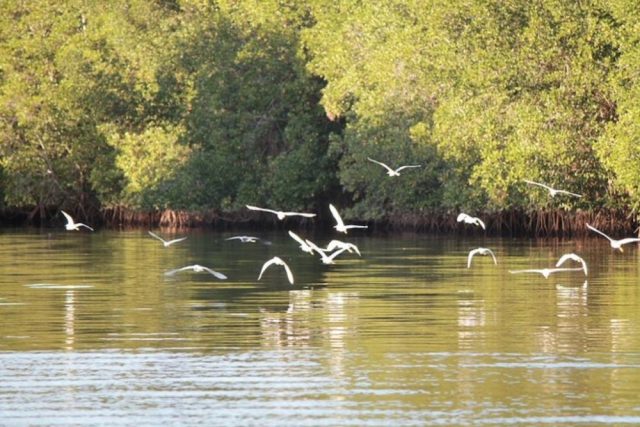
The island is home to a number of wildlife species.  The swampy mangrove ecosystem provides sanctuary for a broad variety of birds, including pelicans, egrets, herons and terns. In the waters, there are cayman and the occasional crocodile.  But it’s the sea turtles that have made Juan Venado Island the top tourist attraction in Las Penitas.

The Sea Turtles of Juan Venado Island

Juan Venado Island Nature Reserve is one of the most important turtle sanctuaries anywhere along the Pacific Ocean, with four types of turtles coming here to nest.

The most commonly sighted sea turtle on Juan Venado is the Olive Ridley, which can grow up to 75cm long and weigh as much as 50kg. Both Hawksbill and Leatherback turtles – each of which are designated as critically endangered species – also come to these beaches to nest. Green Sea Turtles occasionally find their way to the beach as well, but they’re the most rarely seen of the four species.

Typically, nesting season starts in August and ends in December, with the busiest months being in September and October. The eggs are buried by their mother and take approximately two months to hatch.

Once the babies crack through the shell, they’re not done: They’ll have up to 50cm of sand to dig out of before they reach the surface, which can take 4-5 days.  One of the things that makes Juan Venado Island so special is that you can actually be there to witness the young turtles’ first steps on the beach, and watch it scamper into the confines of the sea.

Threats to the Sea Turtles of Juan Venado Reserve

Of course, one of the biggest reasons for the dwindling population of sea turtles in the world is human-related. It’s hard enough for a baby sea turtle to survive in the ocean without human interference (only an estimated 1 in 500 baby sea turtles live to adulthood). Not only do sea turtles have to contend with people descending on nearly every beach in the Las Penitas region, but they are also often captured and sold as pets. Moreover, in Nicaragua, turtle eggs are still harvested for food.

When visiting the sea turtles of Juan Venado Island, please give them the respect and privacy they deserve to help ensure the survival of these beautiful animals.

Tips for Observing Nesting Sea Turtles Responsibly

If you’re out on Playa Tamarindo viewing the eggs being laid or babies hatching, it’s extremely important to remember that you are a spectator in the phenomenon, and not a participant. There are some guidelines that should be followed to protect the animals from becoming distressed and allow nature to take place… well, naturally.

  • Keep your distance from the animals. Always give them a personal space of at least 3 or 4 meters.
  • Never, under any circumstances, should you touch the animals.
  • Stay as quiet as possible. It gives the animal peace and keeps them from seeing you as a threat.
  • It’s understandable that you may want to capture the moment. But using flash photography or even a flashlight is a big no-no, as it can cause distress.
  • Finally, never get in between the nesting mother and the water.

Komodo Dragons & The Wildlife of Indonesia

0
Indonesia Komodo Dragon

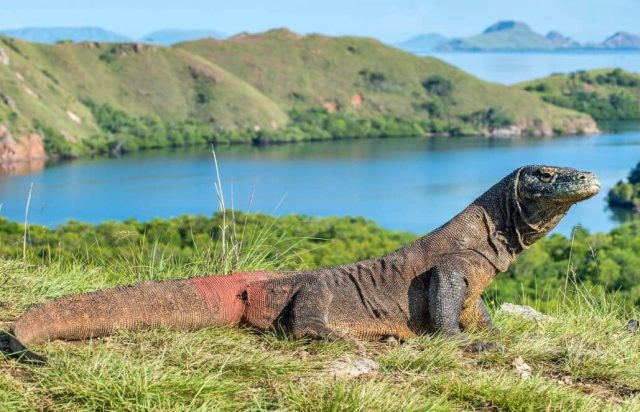
It wasn’t until 1910 that the outside world first discovered Komodo dragons. For millions of years these ancient reptiles had ruled supreme on their Indonesian islands. Without any natural predators, they dominated the ecosystem, and their survival was virtually guaranteed.

The Komodo dragons are a relic of a time when enormous reptiles lived all across this region of the world, from Indonesia down to Australia. Most were wiped out over the years, but this species somehow survived. For scientists, they are now a critical piece of evidence of evolution.

Where to Find Komodo Dragons

The majority of the world’s remaining Komodo dragons are found on two small islands– Komodo Island and Rinca Island– which are all accessible within two hours by boat from the nearest major town of Labuan Bajo, on Flores.

There are less than 5,000 of the species left in total, but they’re easily spotted up close by visitors on both these islands. Their only protection is a local ranger with a stick, who will keep an eye out for any animals getting too close. These ancient animals have free reign over the land: They generally won’t attack humans, but it has happened in the past.

Komodo dragons are vicious and lazy predators. Unlike most reptiles, they often hunt in packs and will surround an animal before attacking it. Sometimes they will bring down their prey with one bite but, if larger animals get away, it doesn’t mean the hunt is over. The saliva of the Komodo dragon contains bacteria that will eventually kill the animal it has bitten. The ancient predators can smell blood from up to 10 kilometers away, and will just track their target for days until it dies.

Life on Komodo and Rinca Island

For being home to such a dangerous species, Komodo and Rinca Islands give off a sense of calm. The blue waters around them are still and the sun shines brightly for most of the year. Birds in the trees tweet happily, perhaps unaware of the monsters below. The Komodo dragons spend most of the day lazing in the sun, conserving their energy. Wild water buffalo, deer, horses and pigs graze on the land while macaques play near the shoreline.

On Rinca Island, the star attractions generally gather on one side, where the rangers can easily keep an eye on them. On the other side, visitors arrive by boat to enjoy the beautiful pristine waters and beaches. One, known as Pink Beach, has become famous in its own right for the color of its sand. Red coral in the water has become mixed with the grains of sand to give off a hue that glimmers in the sunlight.

The Wildlife of Indonesia

Indonesia is the world’s largest archipelago, with more than 17,000 islands stretching across an area about 5,000 kilometers wide. This isolated chain has cultivated one of the richest levels of diversity on the planet, both for fauna and indigenous cultures. The general sense of harmony between the two is one of the reasons so many types of animals have been able to flourish for so long in their own small ecosystems.

Like Komodo dragons, many of the animals found in Indonesia are endemic to very small regions within the country, cut off by water from the rest of the archipelago. These species include the Orangutans in Kalimantan, the Javan Rhinoceros on the western tip of Java, the Drongos of Sumatra, and the Tamarau on Celebes.

Some of these species are endangered (the Javan Rhino in particular), and measures have been put in place to protect them. However, human intervention in the natural world poses a threat to many of the country’s animals.

Bali Barat National Park

Indonesia has 50 national parks across the archipelago, covering land and sea areas. Even on the popular tourist island of Bali, you can still find untouched and protected wilderness. While large hotel developments and nightlife strips have expanded on the island’s southern tip, 158 square kilometers of land in the northwest has been protected as Bali Barat National Park.

The park’s landscapes are a mixture of monsoon forest, mangrove forest, rainforest, savannah and even marine areas. The main aim of Bali Barat is to protect the Bali Starling, one of the most endangered birds in the world. But it’s not the only attraction here: There are more than 150 species of birds found within the park’s perimeter.

Fortunately, Indonesia has not seen the same level of tourism that nearby neighbors such as Thailand have. In general, tourism development has been focused on a small number of areas that have grown rapidly in the past few decades. This means there are still large parts of the country that remain relatively untouched, with natural habitats and native flora and fauna still accessible for travelers.

Some were protected by circumstance, such as the Komodo dragons. Some have been protected more recently by regulation, like the Javan rhinoceros and the Bali Starling. Unfortunately, animals like the Orangutan are still under threat as their land is encroached upon by farmers looking for an income from palm oil.

Explore Indonesia’s Wildlife Hotspots

For eco-minded travelers, there is a whole world of fauna to discover across the Indonesian archipelago that takes visitors on a journey through diverse landscapes and millions of years of evolution. Internaitonal Expeditions’ Bali to Komodo tour features ranger-led nature walks, snorkeling and more.

Iconic Animals in the Unique Lands of Panama

0

With a plethora of biodiverse national parks spanning the country, there’s a wide array of animals in Panama for visitors to enjoy. From La Amistad (on the western border with Costa Rica) to Darien National Park (bordering Colombia in the east), the country is filled with more than 10,000 types of plants and hundreds of species of mammals, reptiles, and amphibians.

Whether you prefer fertile land covered in lush rainforests or tropical beaches surrounded by big, blue ocean, Panama has plenty of natural beauty to spare. The country’s coast is dotted by islands such as the Bocas del Toro archipelago, Pearl Islands, and San Blas Islands, with abundant marine life to be seen along with the picturesque scenic views.

Here’s a look at some of the more iconic creatures you may see on Panama tours in this unique land, which serves as a crossroads between North and South America.

AMPHIBIANS

According to the Smithsonian Tropical Research Institute, there are over 200 different species of amphibians found in Panama. But the red-eyed tree frog is one of the most beloved, with its small green body and the piercing red eyes that give it its name. In Panama, these little amphibians are commonly spotted in tropical rainforest habitats, usually resting behind large leaves during the day and becoming more active at night.

BUSH DOG

With an appearance more like a large weasel or a very small (around 13 pounds) bear, the bush dog is a relatively rare and unusual animal of Panama. They’re very hard to spot, usually preferring to hide in rainforests. They’re quite fond of the water and feed on reptiles and small mammals. Sometimes they have been known to hunt for larger mammals, including capybaras, as well.

CAPYBARA

The massive capybara is a “rodent of unusual size,” and one species can be found in Panama. The Panamanian capybara has short brown fur and short limbs, but at an average of 60 pounds, they’re a bit smaller than their cousins in South America. The capybara spends a lot of its time near the water, and can often be seen near the Chagres River.

DOLPHINS

Dolphins are among the smartest creatures on Earth, and the Atlantic bottlenose dolphin is particularly renowned for playful interaction. They can often be seen off the coast of Panama, swimming in pods and leaping in the waves created by boats. In addition to the clicking sounds they use for communication, they’re known for their speed, agility, and use of echolocation to find prey.

GIANT ANTEATER

Also known as the ant bear, the giant anteater is a large mammal that can weigh up to 90 pounds. They’ve got a long, narrow tongue and long snout to match, with a sense of smell 40 times more powerful than that of humans. These animals can be found throughout much of Central and South America, but in Panama, they’re most often spotted in Darien National Park (a UNESCO site).

GREEN IGUANA

The green iguana is one of many reptiles most commonly seen in Panama. These ancient-looking lizards love the rainforest, where they feed on plants and fruit. If you get a chance to visit the Isla Iguana Wildlife Refuge– a 58-hectare island reserve three miles off the east coast of the Azuero Peninsula– it’s a great place to find them, as well as thousands of birds and a thriving coral reef system.

JAGUAR

Panama is home to several impressive cat species, but none more formidable than the jaguar. These majestic cats are known for their distinctive spots, swimming prowess, and pursuit of many different types of prey along the water. Unfortunately, Central America’s jaguar populations are on the decline due to human interference, deforestation, and other issues.

JAGUARUNDI

One of the most unusual species of cats in Panama is the jaguarundi, which can be found in both arid and rainforest habitats. They’re considerably smaller and slimmer than jaguars– measuring up to 30 inches (not including the tail) and weighing less than 20 pounds– with solid coats in black, brown, or red. These cats can usually be found near water, feeding on various types of small mammals.

MARGAY

The margay is smaller than the other wild cats in Panama, measuring 19 to 30 inches long and weighing less than 10 pounds. These beautiful spotted cats are known for their impressive tree-climbing skills: They can even climb down trees head-first, unlike many other cats. Though they are mostly nocturnal, daytime sightings are not uncommon.

MONKEYS

From two kinds of howler monkeys and spider monkeys to Geoffrey’s tamarin, there are eight different species of monkeys in Panama. The white-headed capuchin– a small but energetic monkey with a white face and head– is probably the most commonly seen. They’re known for their climbing skills and territorial nature, while squirrel monkeys are known for their speed and Panamanian night monkeys for their big eyes.

MORPHO BUTTERFLIES

Bright blue, iridescent wings identify the beloved morpho butterfly, another species that is commonly seen throughout Panama. Blue morphos can be seen flying through the air in the daytime, drinking fruit juice and tree sap, and sampling the air with their antennae. There are actually more than two dozen subspecies, with a dazzling array of color patterns on their wings.

SEA TURTLES

Panama is a popular place for several of the world’s sea turtle species. Coiba National Park, which is located south of mainland Panama, is visited by four types of sea turtles: leatherback, loggerhead, hawksbill, and green turtles. The uncrowded beaches of Isla Coiba (the site of a prison during the Noriega years) are a great spot for sea turtles to lay their eggs before heading back to the water.

SLOTHS

Sloths come in two different families– two-toed and three-toed. The pygmy three-toed sloth (one of several varieties found in Panama) is native to Isla Escudo de Veraguas, which is located north of mainland Panama. The pygmy sloth is unique for its preferred mangrove forest habitat. But, like other types of sloths, they’re helpless on the ground and surprisingly adept at swimming.

TAPIRS

Looking like a bizarre cross between a pig, a donkey, and a rhino, the tapir can be spotted at numerous national parks and wildlife reserves in Panama. They can often be found relaxing in forests near bodies of water and mud. They use their short trunks to grab ahold of food, with fresh fruits among their favorites.

WHALE SHARKS

Whale sharks are the largest fish species in the world. With a lifespan of up to 70 years, whale sharks are known for their large mouths, which are used to filter-feed on small fish and plankton. Coiba National Park is one of the few places where visitors can catch a glimpse or have a chance to swim with these gentle giants during their peak season (June through September).  –Anika Chaturvedi

Amazon Rainforest Animals: A Beginner’s Guide to 21 Species

0

Over the last decade or so, the news from Brazil has been full of heartbreaking reports about deforestation, water pollution, and ever-increasing threats to Amazon rainforest animals.

What’s less well-known is the fact that the Amazon Basin – one of the world’s largest and most biodiverse repositories of plant and animal life – stretches across South America, covering 4.6 million square miles (or roughly 40% of the continent). Though the Brazilian Amazon has been plagued by a seemingly endless stream of environmental issues, the rainforests of Ecuador and Peru remain relatively unspoiled.

The Yasuni National Park area, which protects most of the Ecuadorian Amazon basin, contains 150 amphibian and 121 reptile species, which is more than all of the species found in the U.S. and Canada combined. Ecuador’s Amazon animals also include over 300 species of fish (including three piranha species) and 70,000 insect species per acre of rainforest.

The Amazon rainforest covers approximately 60% of Peru, which is the largest extension in any country after Brazil. Peru has the largest number of birds and the third largest number of mammals in the world. This is largely due to the rich biodiversity found within the Peruvian Amazon region.

So what animals can you possibly expect to see during your Amazon tour with International Expeditions? Here’s a look at our favorite animals of the Amazon Rainforest, including mammals, birds, reptiles, and amphibians!

Amazon Animals

Amazon River Dolphin

The Amazon River Dolphin looks remarkably different from its more familiar, ocean-faring cousin. Its body is pale pink, with an elongated neck that can be moved left and right, a long snout reminiscent of a beak, a rounded head, and a smaller dorsal fin. It feeds on small fish, crabs, and turtles. Like many other aquatic animals in the Amazon, the Dolphin is threatened by pollution and various development projects which restrict the river’s natural flow. The River Dolphins have traditionally been spared from tribal hunting because they were believed to be magical creatures. But these days Dolphins are often struck by fishermen’s boats or get tangled in their nets.

Capybara

The Capybara is the largest rodent in the world, measuring up to 4 feet in length and weighing up to 140 pounds, with females slightly larger than males. Their name derives from Tupi, a language from the people who inhabited Coastal Brazil, and means “grass-eater.” This is because fully grown Capybara can eat up to 8 pounds of grass per day. They really like water, and are commonly found in swampy areas, or near lakes and rivers. They’re also very sociable, living in groups of 10 to 30 individuals. During the dry season, different Capybara groups join together for protection: It’s not uncommon for Amazon River cruise guests to see over 100 individuals at once!

Giant Armadillo

Armadillos are peculiar-looking creatures, with their armor-plate casing made of bone and horn. Many species of armadillo can be found in North America. But the largest one, the Giant Armadillo, is only found in the Amazon, where it can reach up to 5 feet long and weigh up to 120 pounds. The Armadillo’s casing can be used for offense as well as defense, and they also possess long front claws and between 80 and 100 teeth (more than any other mammal). They’re nocturnal animals and live in a complex system of burrows. Sadly, hunting and the black market trade are endangering the Giant Armadillo’s survival: Its population numbers have reportedly decreased by 50% over the last 30 years.

Giant River Otter

Otters are common worldwide, but the Giant River Otter is endemic to the Amazon basin. Its body can reach up to around 5 feet in length (plus a 3-foot tail), and it has webbed hands and feet that are perfect for swimming and hunting in the Amazon River’s tributaries. It is often seen feasting of fish and other small prey in oxbow lakes, which are created by slow-flowing rivers changing course, and in other slow-flowing rivers and swamps. Hunting, water pollution and habitat loss are the main causes of their decreasing population numbers.

Jaguar

This is the big cat par excellence of South America, and the Amazon rainforest is one of the Jaguar’s last remaining strongholds. Jaguar numbers are decreasing fast because of illegal hunting and loss of habitat. It’s estimated that only around 6000 individuals survive in the Peruvian Amazon. These big cats are excellent at climbing, swimming, and hunting in the trees. As a result, you may hear them in the jungle, but it’s very difficult to see them through the dense canopy.

Jaguarundi

The Jaguarundi (a.k.a. Eyra cat) is one of the smaller wild cats found in the Amazon. They have short legs, a long body, and an even longer tail.  They also have short, rounded ears and a uniformly-colored coat, which can be either brownish-gray or chestnut red. They typically measure between 21 and 30 inches, with a tail almost as long as their body, and weigh between seven and 20 pounds. Jaguarundis are mainly solitary and active during the day, unlike most felines. Their diet includes small felines, reptiles and ground-feeding birds, as Jaguarundis hunt more on the ground than in trees.

Lophostoma Yasuni Bat

There are hundreds of Bat species in the Amazon, and the Lophostoma Yasuni Bat is definitely one of the most peculiar-looking ones. It’s named after Yasuni National Park, where it is endemic. With its protruding ears (which can reach up to a third of the length of the body) and proboscis, it looks like a fantasy creature halfway between a Gremlin and a Fennec Fox. Like most other Bats, it eats insects. It wasn’t discovered until 2004, so very little is known about it, but scientists suggest it is likely threatened by habitat loss.

Ocelot

It has been estimated that there are around 150 Ocelots per 62 square miles within Yasunì National Park– a remarkable density, given the scarcity of other big cats. The Ocelot is Latin America’s third largest cat, behind the Jaguar and Puma. They’re usually active at night, when they’re out hunting birds, fish or small mammals, and spend the day resting in trees. Ocelots look a bit like large domestic cats, and they have golden fur covered in spots. For this reason, they are also known as the “dwarf leopard.”

Puma

The Puma is the second largest cat in the Americas, after the Jaguar. Their habitat range is the largest of any wild carnivore in the Western Hemisphere. They’re found as far north as Yukon, and as far south as the Andes. Pumas are solitary by nature and mostly hunt at nigh. Their prey in the Amazon include monkeys, birds, wild pigs, armadillos, and capybara. Pumas are more closely related to smaller felines like the house cat, with whom they share behaviors such as purring and the inability to roar. Once common, Pumas are increasingly threatened because of loss of habitat and persecution from locals over fear of livestock attacks.

Pygmy Marmoset

There are approximately 150 species of monkeys found in the Amazon. The Pygmy Marmoset is one of the world’s tiniest primate species, and the smallest one found in the Peruvian and Ecuadorian Amazon. It weighs just over 3.5 oz, and its height is between 4.5 and 6 inches. They live in troops that average around 6 individuals, and they can be found on trees near swamps or streams, feeding mainly on tree sap, insects, small fruit and nectar. Pygmy Marmosets are very small and shy, and thus viewings are extremely difficult.

South American Tapir

There are four Latin American species of Tapir, all of which are classified as vulnerable or endangered by the International Union for the Conservation of Nature (IUCN). The South American Tapir is the largest land mammal in the Ecuadorian and Peruvian Amazon, but it ranks among the Jaguar’s favorite prey. They can grow up to 6.5 feet long and weigh up to 550 pounds, yet they move quickly on land and are also excellent swimmers. Deforestation and hunting are the main threats to the Tapir’s survival.

Squirrel Monkey

Often seen throughout the Amazon Basin, these monkeys are called “Squirrel” because they’re small and agile and spend most of their life in trees, feeding primarily on fruits and insects. However, unlike most other New World monkeys, they can’t use their tail for climbing. On average, Squirrel Monkeys range between 9.8 and 14 inches in height and weigh 1.7 to 2.4 pounds. They have short, brown-grey fur on their head and shoulders, and yellow-ochre fur on their back and extremities. The fur on their face is black and white, making them vaguely resemble a skeleton. For this reason, the German name for Squirrel Monkeys is Totenkopfaffen, meaning “Death’s Head Monkey.”

AMAZON BIRDS

Hyacinth Macaw

The Hyacinth Macaw is the largest parrot in the world by length, measuring 3.3 feet from the tip of its tail to the top of its head. Hyacinth refers to the color of its feathers, which are blue on the entire body with some yellow coloring around its head and feathers. Along with the Scarlet and Blue-Throated Macaw, Hyacinth Macaws can often be seen soaring in the skies of the Amazon Rainforest. Their diets mainly consist of fruit and nuts from native Amazonian palms, which they break with their hooked beaks (which are strong enough to break coconuts!). They use their tongue to reach into the shell of nuts, and their talons to hang onto trees. Sadly, Hyacinth Macaws are endangered: Their main threat is the illegal pet trade.

Hoatzin

Also known as the Canje Pheasant (or, more commonly, the “punk-rock bird” due to its mohawk-like crest), Hoatzin are genetically enigmatic,. There’s been some intense scientific debate in recent years about their evolutionary connections to other species. The pheasant-sized bird, whose chicks possess claws on two of their wing digits, is also colloquially known as the Stinkbird due to the manure-like odor caused by its unique digestive system. The noises they make are just as odd, including a bizarre variety of groans, croaks, hisses, and grunts that are often associated with its body movements.

King Vulture

Common throughout Central and South America, King Vultures are arguably among the most beautiful birds of the Amazon Rainforest. They measure between 26 and 32 inches, with a 4-7 foot wingspan. After the Condor, they’re the largest of all the New World vultures. It’s believed that the “King” in their name derived from an old Mayan legend that saw King Vultures as messengers between the living and the gods. Their body is mainly white, with long black feathers on their wings and tails. They have no feathers on their head and neck, but their skin is vividly colored in red and purple shades on the head, orange on the neck, and yellow on the throat. Like all vultures, they’re scavengers helping to keep the ecosystem clean of carrion.

Spectacled Owl

The Spectacled Owl is the only owl species found in the Amazon rainforest. It’s medium-sized, measuring approximately 18-20 inches in height. It has a rounded head and no ear tufts, and a dark-feathered face with markings resembling spectacles made of white eyebrows and other white streaks on the cheeks. The favorite habitat of Spectacled Owls is thick, primary rainforest, but they sometimes move to sparser woodlands when hunting. They’re solitary birds, most active during the night. They hunt very effectively by swooping down from their roost to catch their prey. Any kind of rodent or small mammal can potentially fall prey to the Spectacled Owl… even Sloths!

Toco Toucan

The Toco Toucan is the largest and best known of the seven Toucan species found in the Amazon. Their plumage is mainly black on the body and white on the face and throat, with a yellow and blue ring of skin around the eyes. The most striking feature is their oversized bill, which is orange-yellow in color and measures between 6 and 9 inches. Since the total length of the species is about 20 inches, they look awkward when flying. But their bill is actually quite light, since it’s hollow. Toucans are sociable birds and are often seen flying in small groups, especially at sunset. They’re omnivores, using their bill to reach for insects, fruit, small reptiles, as well as other birds and their eggs.

AMAZON REPTILES & AMPHIBIANS

Black Caiman

The Black Caiman is the largest of the Amazon reptiles, and also one of the largest and most effective predators. They have dark, scaly skin, grow up to 10–14 feet in length, and sometimes exceed 800 pounds in weight. They hunt pretty much any kind of land-based or river-dwelling animal. They’ve even been known to eat old or weak Caimans! There have also been reported attacks on Pumas and Jaguars, but they’re very rare and the species usually avoid one another as much as possible. The Spectacled Caiman is also found in the Amazon rainforest region, but it’s much smaller.

Green Anaconda

Found in the northern part of South America (including the Amazon), the Green Anaconda is the heaviest and one of the longest known snake species. It usually measures about 15-16 feet long, with weight ranging between 60 and 150 pounds. The Reticulated Python of Southeast Asia is slightly longer, but the Green Anaconda is generally more robust. They’re non-venomous snakes, killing their prey by suffocation before swallowing it whole. They can kill large animals such as Capybara, Tapirs, or even Jaguars, but there’s little evidence of attacks on humans. Anacondas spend most of their time near water: For this reason, they’re also commonly known as “Water Boa.”

Poison Dart Frogs

These strikingly colorful frogs are commonly found in the rainforests of Central and South America. Their vivid yellow and blue markings are nature’s way of warning other species that these tiny amphibians– which measure just 1-2 inches long– are very, very poisonous! Their name is taken from the fact that native South American people used to capture these frogs in order to dip their arrows and spears in their toxic secretions. They’re now under increasing threat, mostly due to poaching for the illegal pet trade.

South American River Turtle

The South American River Turtle, also known as the Arrau Turtle, is the largest freshwater turtle in the Amazon. It can grow up to 200 pounds and measure around 3.5 ft long. They’re mostly vegetarian and play an important role in maintaining a healthy riverine ecosystem. They’re scavengers, so they keep the rivers clean by removing dead leaves, fish, and other organic materials. The presence of River Turtles in the Amazon is considered a sign of the ecological well-being of a given area of the river. However, they are now under threat because of hunting, egg collection, habitat loss, and pollution.